Acme by Casago

Palm Desert / La Quinta / Indian Wells / Indio / Coachella · Amenity intelligence

Amenities that carry the stay.

Good Palm Desert / La Quinta / Indian Wells / Indio / Coachella amenities earn their place in the guest story and the operating plan. Explore the property features, service requirements and local context behind the next decision.

Existing owner? Access your Owner Portal

The short answer Buy reliability before novelty. A serviced pool, cooling you can prove works, shade that survives the season and clear parking will do more for a desert stay than any decorative upgrade — and each of them is a standing operating cost, not a one-off purchase. Check your association’s architectural rules before you change anything outside.

Six amenities

What each one really asks of you.

Pool and spa

The signature, and the standing obligation.

Why it matters here: it is the reason a large share of guests choose this valley at all, and the entire product in summer.

Operating trade-off: weekly chemistry, energy and water, barrier and safety compliance, equipment repair, and downtime that has to be communicated before arrival rather than after.

Worth reviewing when: the service record is thin, the heater age is unknown, or the listing photographs a feature nobody has budgeted to run.

Cooling

Not an amenity. A precondition.

Why it matters here: a July afternoon is unsurvivable indoors without working air conditioning, and a failure mid-stay is a refund conversation.

Operating trade-off: documented preventative service, filter changes, a pre-arrival check and a same-day vendor path. Redundancy in a large home is worth costing.

Worth reviewing when: the unit is near end of life, or when nobody can produce a service history.

Shade and outdoor dining

Winter patio weather is the sell.

Why it matters here: the destination describes winter as patio weather and fall as the return to outdoor living. Shade is what makes the space usable either side of peak.

Operating trade-off: heat-aware fabrics and finishes, a replacement budget, and architectural approval from the association before anything is installed.

Worth reviewing when: outdoor furniture is faded, or a structure went up without written HOA approval.

Parking

The thing that gets you cited.

Why it matters here: Palm Desert lists parking on a public street among its operational violations, with escalating fines. Event weekends are when it is enforced.

Operating trade-off: the listing has to state the real on-site capacity, and the house rules have to be enforced, not just written.

Worth reviewing when: the sleeping capacity exceeds what the driveway can hold, or the community restricts overnight street parking.

Connectivity and smart controls

Useful only if the network is reliable.

Why it matters here: extended winter stays increasingly include remote work, and reservation-aware climate control is how a home stays comfortable without running empty.

Operating trade-off: resilient internet, permissioned access, plain guest instructions and a local service plan behind the devices.

Worth reviewing when: the network is consumer-grade, or devices are on a previous owner’s account.

Sport and gear storage

Small, cheap, specific.

Why it matters here: golf and tennis travel dominates the winter and spring calendar. Secure club storage and a gear-drop space cost little and read as local knowledge.

Operating trade-off: extra sleeping configurations are a different matter — they add wear, cleaning and occupancy risk, and must stay inside the legal bedroom count and the permit limit.

Worth reviewing when: the listing advertises a bedroom count the building code would call a den.

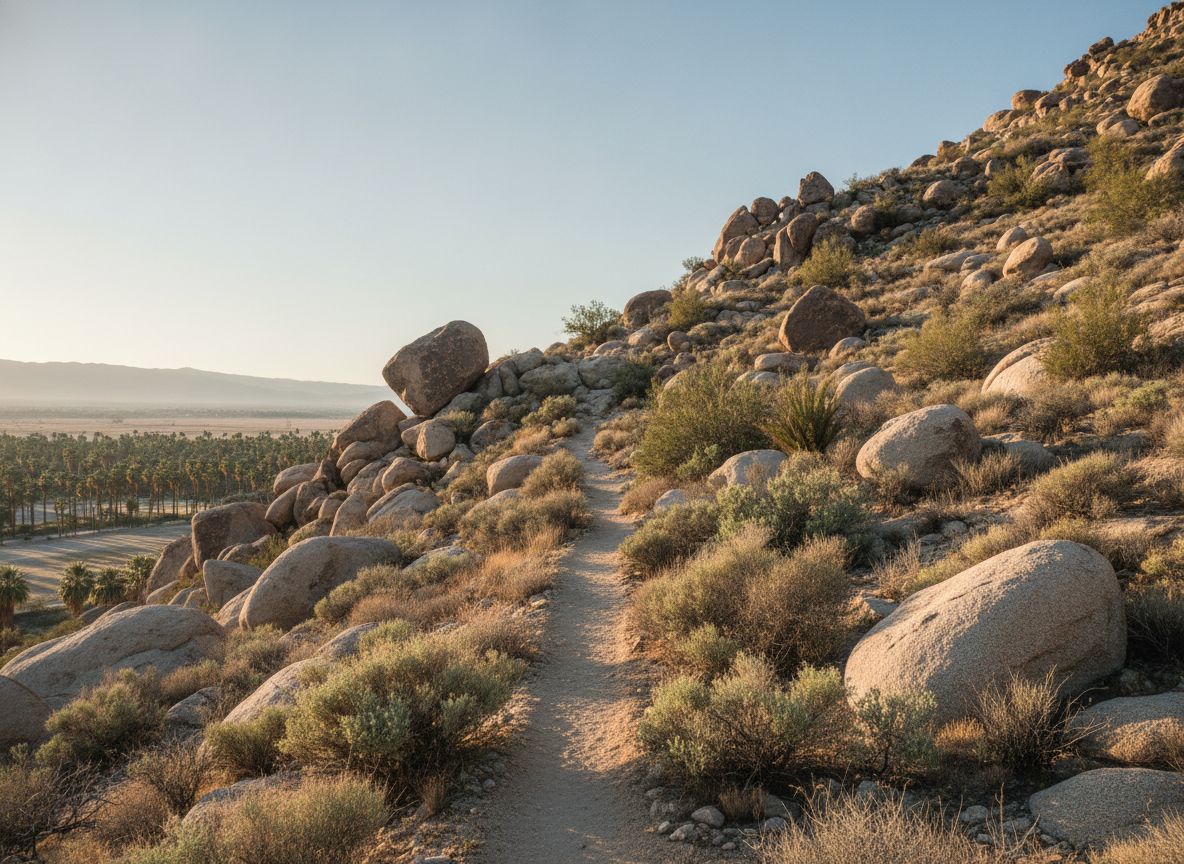
A sandy desert trail climbing between creosote and rock toward bare mountain slopes
Illustrative. Not a specific Casago-managed home.

The local guest and comfort

Heat is the design constraint everything else answers to.

The desert guest experience splits cleanly. From late fall through spring the home is being used outdoors, and shade, lighting, seating and a warm pool decide the review. Through summer the home is being used indoors with a pool break, and cooling capacity, window shading, ceiling fans and a reliable service response decide it instead.

That split is why the same amenity list does not serve both halves of the year. A patio heater matters in January and is dead weight in July; a second air-conditioning zone is the opposite. Plan the maintenance calendar around the season the feature actually serves, and make sure the listing photographs match the season a guest is booking into.

  • Bedroom representation. Palm Desert states that a bedroom must have a properly sized window or door opening directly to a street, alley, yard or court, that rooms adjacent to enclosed atriums are dens, and that the City monitors listings and may fine or deny a permit for an inaccurate bedroom count.
  • Association architectural rules. Shade structures, exterior lighting, landscaping changes and pool equipment are commonly governed by the association, often more tightly than by the city.
  • Occupancy on the permit. Advertise the number the permit allows, not the number the house sleeps.

Cost-versus-care review

Three steps before you spend anything.

Every amenity is a recurring cost with an occasional revenue effect, not the other way round.

  1. Cost the whole life cycle

    Capital work, utility use, ongoing service, replacement cycle, cleaning time, safety measures, guest-misuse exposure and an outage plan. Write them all down before the first quote.

  2. Clear the permissions

    Association architectural rules, CC&Rs, lease terms, city permitting and pool safety requirements are separate approvals. Get them in writing before ordering, not after.

  3. Test the break-even

    Use the amenity break-even worksheet to see what the feature has to return before it pays for its own upkeep. Every input is labelled as yours or illustrative, and nothing is a quote.

    Open the worksheet

Sources and applicability

Amenity questions

Is a pool essential here?

It is close to it for a summer-facing home and strongly expected in winter, but the honest framing is that a pool is a standing service, safety and energy obligation before it is a marketing feature. A home with a smaller, well-maintained outdoor space and dependable cooling often operates better than one with a large pool nobody has budgeted to run. Cost the whole life cycle before adding one.

Can I add a shade structure or change the landscaping?

Check the association first. Architectural controls in this valley's country-club and gated communities are frequently stricter than anything the city requires, and approval has to be in writing before work starts. Palm Desert separately requires an annual HOA Letter of Approval in defined zones, which is a different document from an architectural approval.

How many bedrooms can I advertise?

The number that meets the building code, not the number of rooms with beds in them. Palm Desert's page, checked 2026-09-20, states that a bedroom must have a properly sized window or door opening directly to a public street, alley, yard or court, that rooms adjacent to enclosed atriums are considered dens, and that the City actively monitors listings and may issue administrative fines or deny a permit application where the bedroom count is misrepresented.

Does the Smart Home Program help in this climate?

It is aimed at exactly this problem. Casago's smart home platform ties thermostats, locks and pool equipment to the booking calendar, so the home is cooled before arrival rather than all summer. It works best behind resilient internet and a local service plan; the devices are not a substitute for preventative HVAC maintenance.

Next step

Decide which amenities your home should carry.

Continue to the Owner Portal for a property-specific conversation. Prospective owners choose I’m considering the program. Existing owners sign in as an owner. Nothing about your home is sent from this page.

Acme House Company is a DBA of Acme CA, Inc., operating as Casago Coachella Valley. California DRE #02420145. Michael E. Flannery, Designated Broker.